
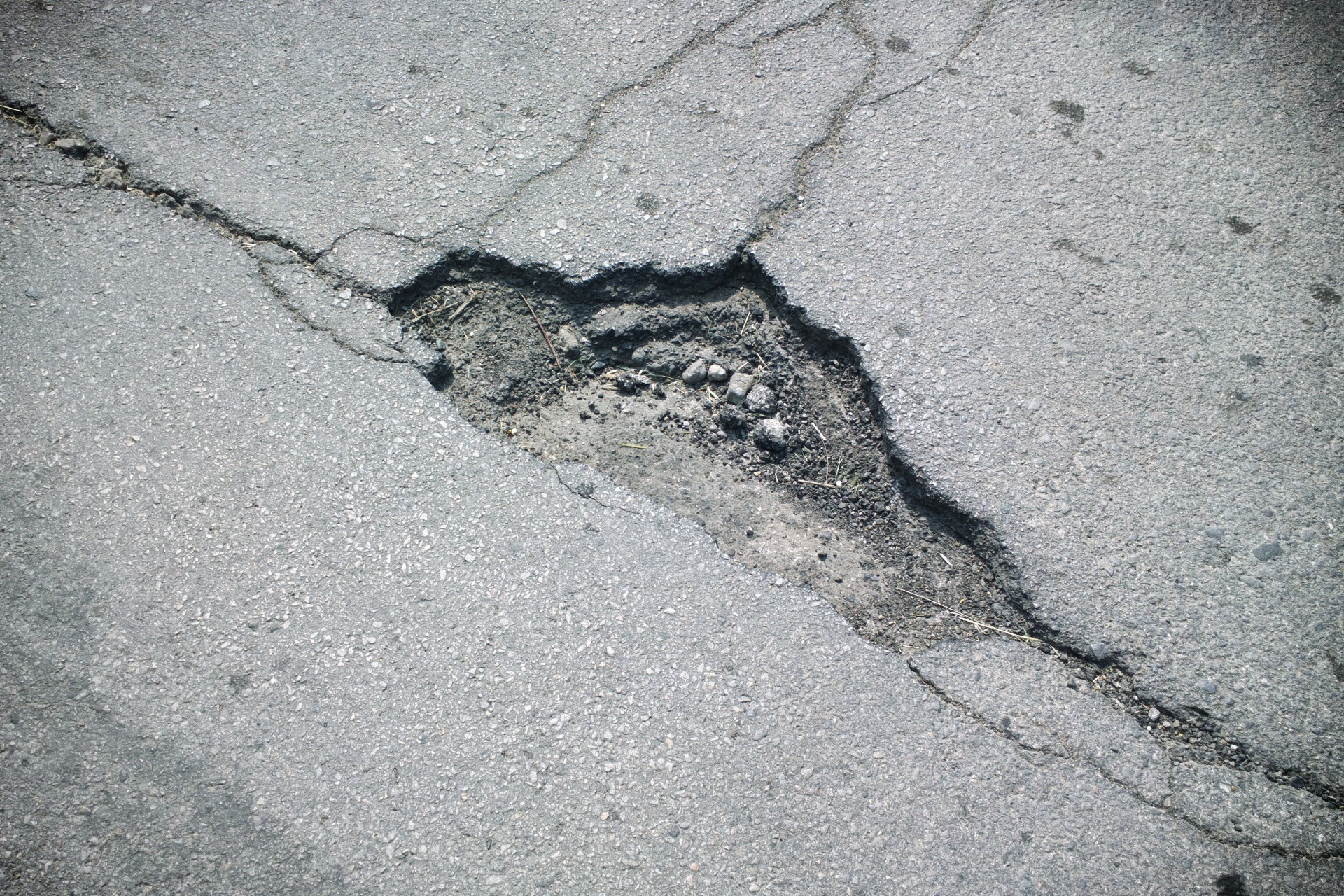
How Do Potholes Form?
The familiar frustration and annoyance from hitting a jarring pothole on the road or in a parking lot happens far too often. More than nuisances for commercial property owners, potholes can become a serious issue, causing loss of customer retention and posing potential safety hazards.
If you’re wondering how to avoid the recurrence of potholes on your commercial property’s concrete surfaces, you may be asking, how do potholes form?
Quick Summary
Potholes in concrete parking lots form from small cracks, water infiltration, freeze-thaw cycles, and traffic stress. They pose safety risks, cause vehicle damage, and harm property value. This blog explains how potholes develop and offers prevention tips like improving drainage, sealing cracks, and scheduling regular maintenance. Partnering with professionals like K&E Flatwork ensures long-term protection and performance.
How Do Potholes Form on Concrete Surfaces?
Potholes, those aggravating bowl-shaped cavities that develop on the surface of roads and parking lots, form as a result of small, seemingly innocuous cracks. As water collects and potentially freezes in the fractured concrete and the agitation of traffic grinds over top of it, gradually, the pavement breaks apart, forming a pothole.
Common Ways Potholes Form in Parking Lots
From the initial cracks to the eventual collapse of the pavement, read on to discover the elements and factors that transition a smooth area of concrete into an unsightly, gaping depression.
1. Surface Cracks
Potholes all start with tiny, often imperceptible cracks on the concrete surface caused by a combination of factors, including age, weather conditions, and traffic.
2. Moisture Infiltration
Due to rain or snow, water penetrates the cracks in the concrete, weakening the pavement’s structural integrity. Additionally, water can carry salt and other corrosive substances, exacerbating the damage.
3. Freeze-Thaw Cycles
In regions with fluctuating temperatures, moisture that seeps into cracks in the concrete can freeze during cold spells. As water freezes, it expands, applying pressure on the surrounding concrete and widening existing gaps.
4. Traffic Wear and Tear
The constant passage of vehicles over these weakened areas compacts the soil beneath the concrete. The abrasive effects of tires further deteriorate the concrete surface.
5. Erosion
Amplifying the deterioration process, water movement erodes the underlying layers of the concrete materials, creating voids beneath the surface.
6. Pothole Emergence
Over time, the continuous process of moisture infiltration, freeze-thaw cycles, traffic compaction, and erosion weakens the concrete. Eventually, the concrete collapses under the weight of vehicles, leading to the emergence of a pothole.
What Are the Dangers of Potholes in a Concrete Parking Lot?
Potholes can pose significant detriments to concrete parking lots, creating many problems for commercial property owners.
- Pedestrian Hazards & Liability
Uneven pavement can cause trips and falls, leading to potential injury claims. - Vehicle Damage & Customer Complaints
Potholes damage tires, wheels, and suspensions, driving customers away and opening your business to liability claims. - Negative First Impressions
A poorly maintained lot sends a message of neglect to visitors, tenants, or potential investors. - Operational Disruptions
Deliveries may be delayed, foot traffic may decline, and businesses may lose revenue due to accessibility issues. - Legal Exposure
If a pothole results in an injury or property damage, the property owner can be held responsible for medical expenses or repairs.
How Can Commercial Property Owners Prevent Potholes from Forming?
The costly and inconvenient consequences for your commercial property mentioned above highlight the urgency of promptly addressing potholes. The following practical strategies can help you reduce pothole formation and avoid these potential issues.
1. Regular Inspections
Implement a routine maintenance schedule with visual inspections of your concrete parking lot. Closely examine the entire surface, looking for early signs of cracks, depressions, or damage to catch issues in their infancy, allowing for timely intervention.
Look for early warning signs:
- Hairline or spider-web cracking
- Pooling water after rain
- Uneven areas or depressions
- Surface flaking or scaling
2. Improve Drainage Infrastructure
Standing water is one of the leading causes of potholes. Consider:
- Trench drains around entrances and exits
- Catch basins in low areas
- French drains to redirect subsurface water
- Proper grading to ensure water flows away from the concrete
3. Seal Cracks Promptly
Early crack sealing prevents moisture from entering and freezing beneath the surface. For best results:
- Use high-quality joint and crack sealants
- Re-seal cracks every 2–3 years depending on traffic volume
4. Use High-Performance Concrete Mixes
When resurfacing or repairing, choose water-resistant, fiber-reinforced concrete for added durability and reduced cracking.
5. Install Surface Sealants
Apply a concrete sealant every few years to create a barrier against water, salt, oil, and UV damage. This also enhances your lot’s appearance and ease of cleaning.
6. Schedule Preventative Maintenance
- Pressure wash and sweep seasonally
- Remove debris, leaves, and oil regularly
- Repaint faded striping and markings to maintain professional appeal
When Should You Repair a Pothole?
Early intervention is key. Call a professional concrete contractor if you notice:
- A depression deeper than 1 inch
- Crumbling edges around cracks
- Water collecting in a sunken area
- Increased complaints or vehicle damage reports
Waiting allows the damage to spread—what could’ve been a simple patch may turn into a costly full-depth repair.
Professional Concrete Repair and Paving Services
Experienced contractors have the knowledge and equipment needed to address existing issues and prevent future ones. Don’t wait for potholes to become a problem on your property. Take the proactive step of contacting a professional like K&E Flatwork to ensure the longevity and safety of your concrete surfaces.
At K&E Flatwork, we specialize in providing superior commercial concrete repair and paving services in Kansas City with a commitment to quality and customer satisfaction. Contact us today to speak with a concrete specialist.
.jpg)
Ready to Get Your Project Moving?
Commercial concrete services built for performance, reliability, and long-term value. Speak directly with our team to get started.


designed and developed by Treasure Advertising 💚